|











Write to us! |
| Family camping in Africa. Sahara Desert crossing with children in Jeep & tent trailer. Travel in Morocco, Algeria, Niger, Nigeria, Ghana, & west coast. Exploring, safari, backcountry,
backroads, overlanders
|
The Blickley Family's
African
Camping
We are in the
process of updating our African story and photos
This travel account was
originally written onsite while traveling.
|
Africa! What a continent! To actually be here and see for ourselves, is better than any research done by us from the United States.
Our
family traveled helping Bill to continue his urban study of public transit, housing, solid waste disposal, neighborhood organizations and cultural differences and similarities to the United States that
we began in
Europe four months earlier.
While in Europe we visited the French national offices that worked
with African countries and received several names, phone numbers and
addresses of officials in several African countries who could help
him in his continued studies. |
 |
Before leaving the United States we tried to obtain as much
information about Africa and especially the Sahara Desert as
possible. When in Morocco we visited the American Embassy and
sought information about crossing into Sub-Saharan Africa and were
told that traveling along the West coast of the continent was
dangerous due to political unrest and insurgents who would stop and
molest any travelers like us. We were advised to travel from
Algiers South across the Sahara to Kano Nigeria.
We
soon realized that we were not adequately equipped, but God was with
us! |
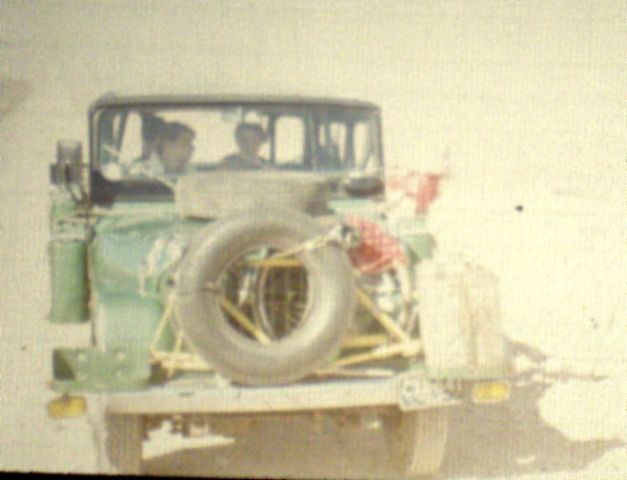
We crossed the Straights of Gibraltar on a ferry with our Jeep and
tent camper trailer landing in the Moroccan port of Tangier where
the sounds, scents, and scenes were completely different from
anything that we had ever experienced before. The first night
camping outside Tangier was Christmas Eve. Nearby our
campsite, in a small neighborhood reminding us of a Biblical scene,
there were several Moroccan Moslems celebrating their religious
holiday roasting rams heads in front of their adobe homes along
a narrow winding street. It was like visiting an Old Testament
scene for us to celebrate Christmas here. Although the
traveling was not physically difficult, it didn't take us long to be
exhausted taking in the new environment that required all our energy
to translate the implications of all the new things that we were
experiencing.
After a couple days rest and cultural adjustment, we traveled to Rabat, one of the four imperial cities.
While driving in the cities and villages we continued to see
people carrying material on hand made carts, pulled by horses, mules
and donkeys, that were made using a truck axel with 17" rims and
heavy truck tires. When we saw this Bill wished that we had
one of those axels and wheels for crossing the desert rather than
the 10" rims and recreational tires that that were on our trailer.
We found a beautiful
spot to camp along the Atlantic Coast operated by a Moroccan family who made our stay most enjoyable.
Nearby the operators of the campsite had an outside oven constructed
of dried mud in the shape of a dome about four feet in diameter.
Out of this oven came delicious loaves of bread that looked and
tasted like a combination of a German/French and African recipe.
While camping here, one evening we heard the sounds of an automobile
crash on the road near the campground. Then a few minutes
later we again heard More crashing which caused Bill to investigate.
After walking to the paved highway about a hundred yards away he
found that there were several cars that had been an accident and
other cars were continuing to crash into these cars. As a
warning to oncoming traffic, the crash victims had laid small
branches and stones in the traffic lane to warn on-coming traffic of
the accident. Even in the daylight, on this winding road, the
branches and stones were not an adequate warning. It was
getting dark and no one was moving the cars out of the road!
Anxious that many people would get injured, Bill ran back to the
camper, got a long pole and a pillow case. He attached the
pillow case on the end of the pole like a flag, and after walking up
the road ahead of the accident, he stood way off the edge of the
road and held the white pillow case out into the traffic lane to
slow down the speeding traffic headed toward the wrecked vehicles.
When the headlights of the approaching cars lit up the white pillow
case in the middle of the road, the drivers quickly braked
slowing down enough to stop before they hit any of the wrecked
vehicles and injured people. We made another set-up like it,
and LaVerne and the boys went further up the road to double the
slow-down effect. After about 45 minutes, finally
the traffic police arrived with warning lights. When Bill saw
them coming we quickly left the scene so as to not be caught up in
any official problems there with the police. Later we were
told that this stretch of road was called the "RED ROAD" because of
all the serious accidents that happened on it.
In Alfeciras, Spain, we were told by a German desert traveler that it is impossible and forbidden to tow a trailer across the desert. There are three main roads which cross the desert; the quality of the road surface is not comparable to anything in the United States. The trails in the national forests of upper Michigan are
top-grade roads in comparison to desert tracks. The road with the best reputation regarding gas, water, and supplies runs from Algiers, Algeria in the north to Kano, Nigeria in the south. The route is over two thousand miles in length, with approximately fourteen hundred miles of desert tracks. After speaking with staff members of the Algerian Embassy in Rabat,
we were assured that passage for a trailer was not legally forbidden.
We traveled from Rabat to Casablanca where we planned to pick up some spare parts for the Jeep and to purchase some necessary medicines from the Pasteur
Institute. The road connecting these two imperial cities runs through a dry sandy agricultural region, which provides little income to the local farmers.
Although this region gets very little rain, the orange orchards are
irrigated and produce the best oranges that we have ever eaten.
The land is worked with the latest agricultural equipment.
|
 |
 |
We also visited Marrakech, which is a major tourist center, attracting travelers from all over the world. We took a camel ride through a movie lot where reputedly major American film stars were rehearsing .
We decided to look out for the film when finished so we could see
how the scene worked out. The camels were un-cooperative and needed
to jump over a small stream.
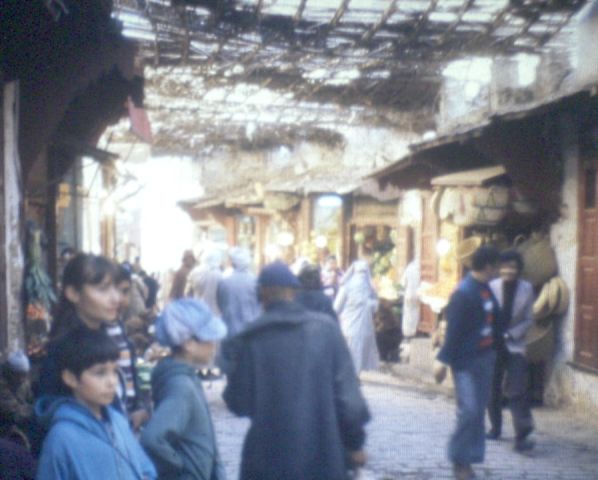
Minor business transactions in Africa are often complicated negotiations. A sum is suggested, many counter-offers are considered, until finally buyer and seller agree. The unvarying routine among Marrakech merchants: "I have a very special bargain for you today. Today only, I sell to you half price." The price quoted is always two to three times the amount that he will accept.
We enjoy the interaction with everyone here, and had a good time in
many local markets. After happily receiving some mail, we left Marrakech for Fez, our last stop in Morocco before entering Algeria and the beginning of the Saharan crossing into what is
locally termed "Black Africa." We entered Fez after nightfall and had some problems finding
a municipal camping spot. Whenever we entered an older portion
of a town visited by tourists, we were always approached by people
who insisted that we hire them as guides. We usually resisted
being lead around, but once we couldn't stand the pressure
when the guides started fighting with each other, pushing back the
younger ones from approaching us. We then hired a young boy
and told him that he had to follow us and keep the other "Tour
Guides" away. It didn't take us long after we entered
Morocco, before we purchased some clothing of the style used by the
local population so that we could enter the markets without being so
quickly spotted as American tourists. We still could be
identified as foreigners but not so quickly, and not as novices. .
We left Fez before
sunrise and saw workers waiting for busses huddled around small
fires for warmth. At the Algerian boarder the officials tried to be
very thorough in their inspection of everything that crossed the
border. They made us open our tent camper and even empty out
our laundry bags so that they could inspect everything we had.
After we had passed the boarder we had a good laugh ,though.
Preparing our equipment in the US we had built small compartments
into the whole length of the trailer's frame. There were about
ten compartments on the underside of our camper trailer. From
each compartment hung a small padlock. Ten small padlocks hung clearly
from under our trailer! The inspectors never thought
to look under the trailer. If they had... it would have been
difficult to have crawled under there and had the inspectors look
into each compartment.
We crossed the Moroccan-Algerian border and traveled east along the
Mediterranean Sea to Oran where we camped next to a fire station. In the morning the firefighters toured our tent camper and we toured their facilities.
We had stopped at "flat-spot sites" called "wild-camping" in
Europe, and lots of times in the USA, and that would be that way
most of the time ahead for us. Look around for a decent flat spot,
see if anyone has to give permission , and stay there for the night. We reached Algiers and searched for a suitable camping spot. We were given permission to camp in the parking lot of a recreational center in Zeralda on the Mediterranean Sea. The complex is designed for upper
-lass tourists (not campers who hang their hand-washed blue jeans on
the fence), and is more beautiful than anything we saw on the French Riviera. The sand is smoother, the architecture is more beautiful, and landscaping is more artistic. The services are more complete and the weather is warmer on the south side of the Mediterranean. Algeria is busy competing for the tourist dollar, and from our vantage point in the parking lot,
camping like Gypsies, we enjoyed watching
how "the other half " lives.
Since leaving Europe
we have continually thought about how we were going to arrive at the
southern end of the Sahara. There were only two real choices,
and each had more disadvantages than advantages. We left the
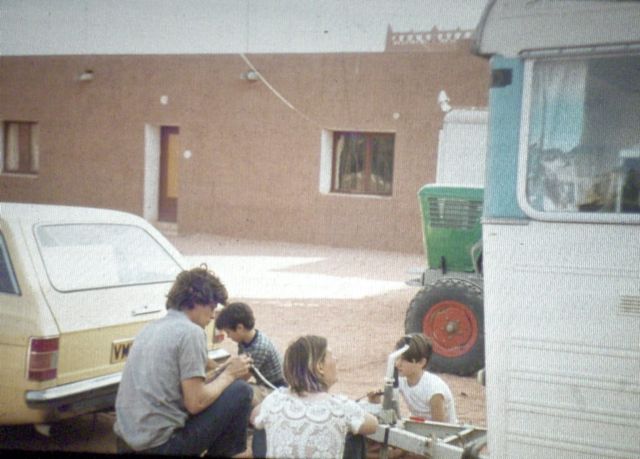
capital city of Algiers on January 12 heading for Kano on February 15. The first one hundred miles we saw many children selling produce, eggs, and live chickens along the mountainous road. Soon the vegetation disappeared and barren rock and sand replaced all greenery.
|
 |
 |
|
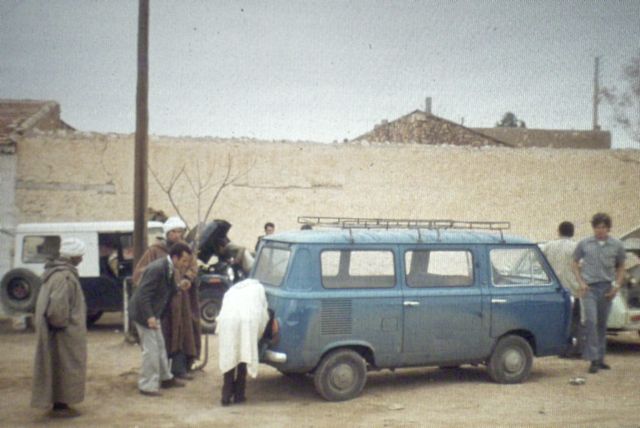
After we left the greenery we came to a small village where we
encountered travelers coming north out of the desert that we planned
to cross. As we approached, we saw that one of the travelers
was driving an American Jeep similar to ours, with the hood up and
several men working on the engine. What an opportunity to
learn about what the road ahead is like! After hearing about
their experience, we shared what our planned route was going to be,
and were told that if we took that route we would die in the desert.
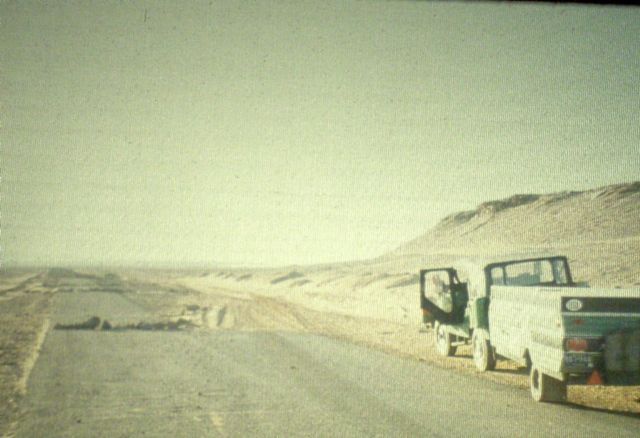
That was not what we wanted to hear! After traveling
into the desert a few hundred miles, we came to another village
where other travelers had a broken trailer set up, not a good omen. |
 |
 |
|
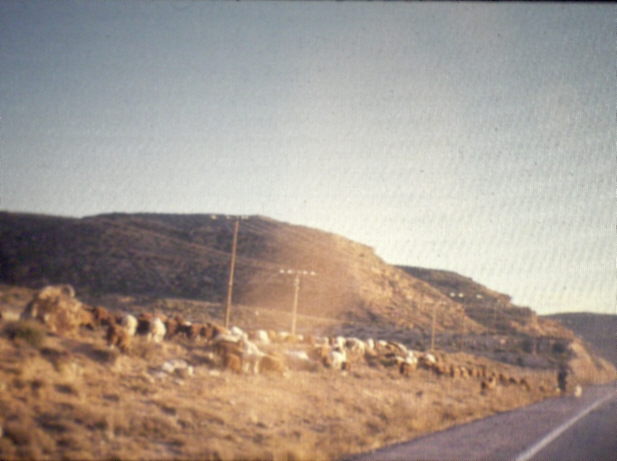
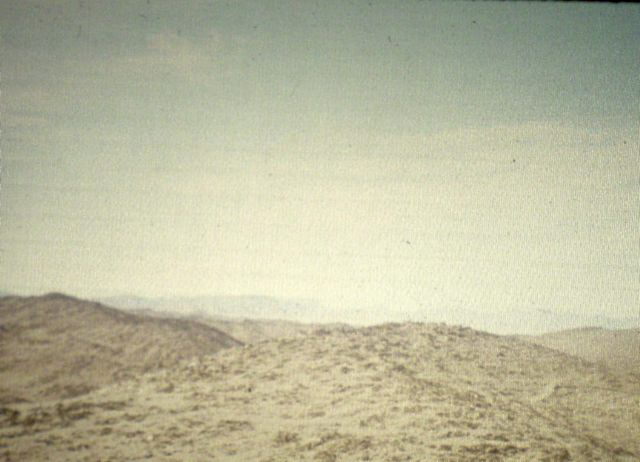
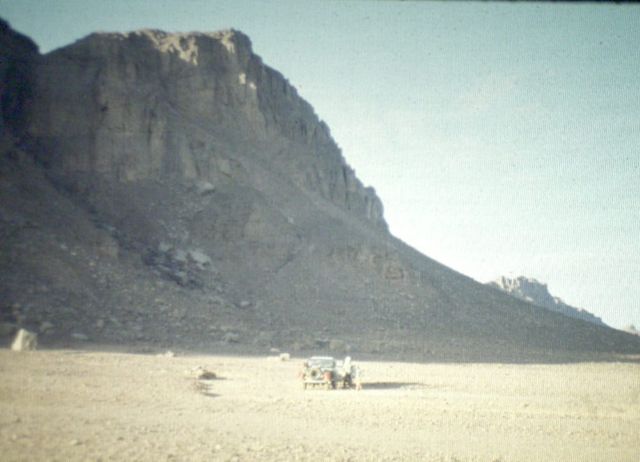
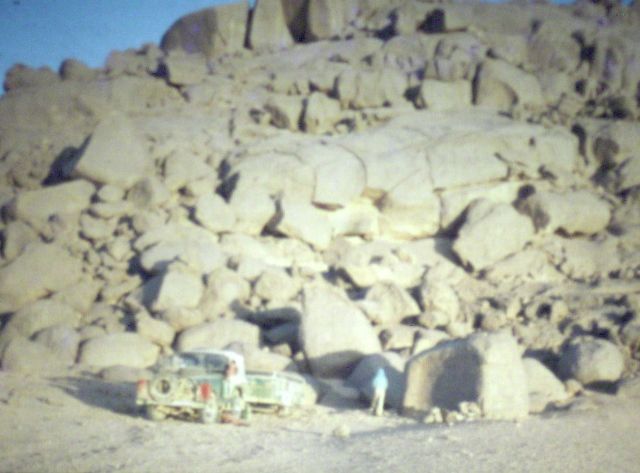
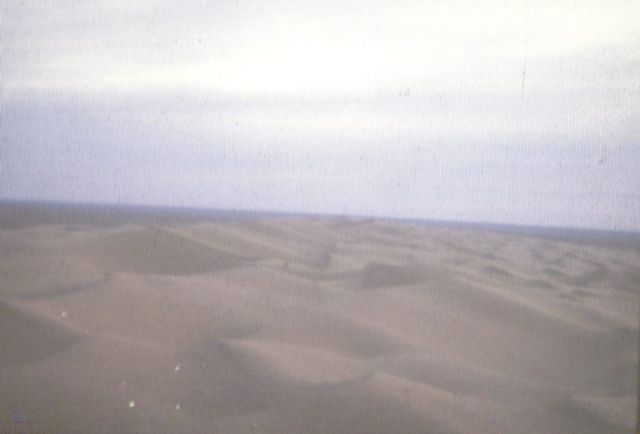
Normally one visualizes the Sahara as endless sand dunes stretching from horizon to horizon. This is true in some parts
where we traveled, but much of the desert that we saw is similar to photos of the moon's surface without the round craters. The land is littered with,
gravel, drifting sand, powder, rock shale and huge boulders. It is beautiful in its silence. |
 |
 |
|
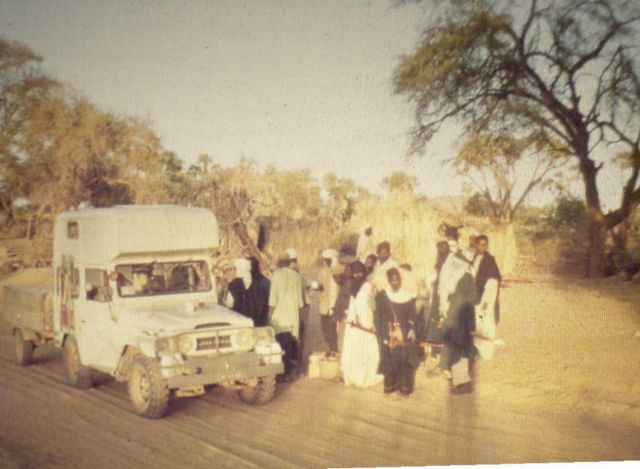
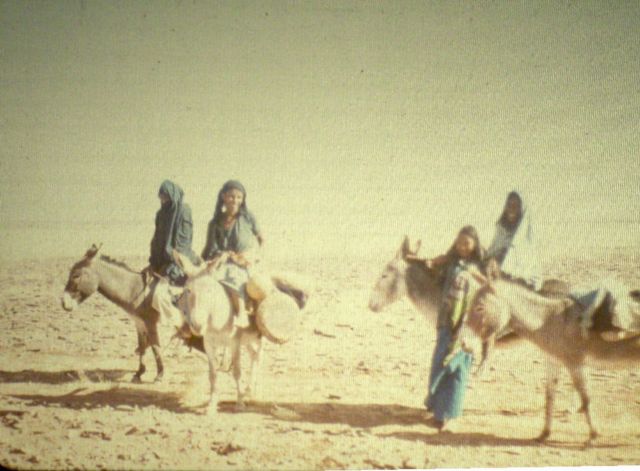
Only the veiled, blue robed Tuaregs and their camels, and the Fulani
with their donkeys inhabit the land between the isolated towns. Both the Tuaregs with their encased swords, and the finely-featured
Fulani would often stop us and request water, matches, and aspirin.
While traveling through the desert we were often met along the trail by people living in the area who were in need of water, matches, or medicine.
We first questioned whether the need was genuine after we had given what we could, and
then later
we were greatly impressed by the fact that in the Sahara Desert, the regular truck drivers carry supplies to give to these desert dwellers.
We would have thought that only people who were unaccustomed to seeing people asking for things would stop.
We've heard that Algerians are rather hard people but we've experienced how caring they are when we were in trouble, and we've also seen how they love one another and demonstrate that love by helping their people who are in need.
|
 |
 |
 |
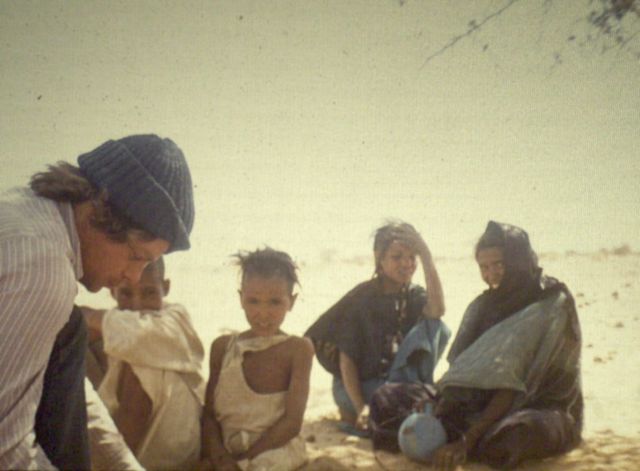
When we stopped for lunch
under a lone thorn tree, curious children whose job is to watch
goats, camels, sheep and cattle, visited us. They didn't speak
English but recognized some of the food that we ate and used the
English names for it. |
|
The Algerian
truckers carry supplies for the desert people, and following their
example, we also carried a supply of necessary survival items for
the people living in these desolate areas. After the first day we wrapped our heads against the dust just as the Tuaregs
and other desert inhabitants do.
|
Go
to Africa page two |
|