|











Write to us! |
Family camping & homeschooling adventure in Africa. Sahara Desert crossing with children in Jeep & tent trailer. Travel in Morocco, Algeria, Niger, Nigeria, Ghana, & west coast. Exploring, safari, backcountry, backroads, overlanders.
|
The Blickley Family's
African Camping
(Page
three) |
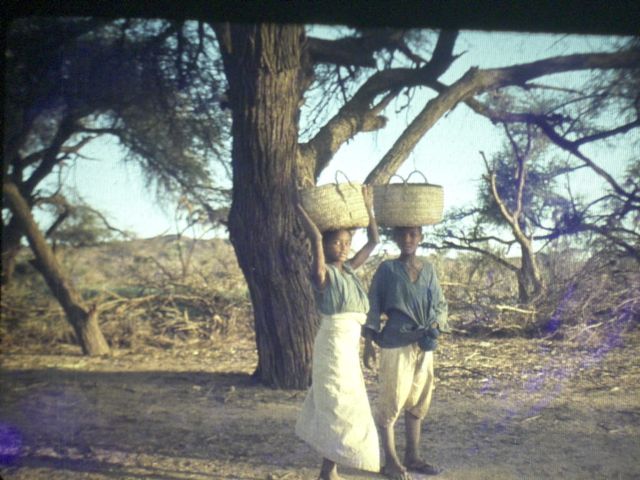
| When traveling in the desert there
are very few opportunities to see green vegetation and even fewer
opportunities to purchase and eat fresh vegetables. When we
came to a small oasis in Niger we saw these beautiful young people
carrying vegetables from their garden. When we came next to
them and saw what they were carrying, we asked if they were
interested in trading their fresh food for caned food. Since
they were in an area without refrigeration, canned food was
something that was very valuable. Without any bargaining, we
made a trade that made both of very happy. |
|
 |
| |
 |
 |
|
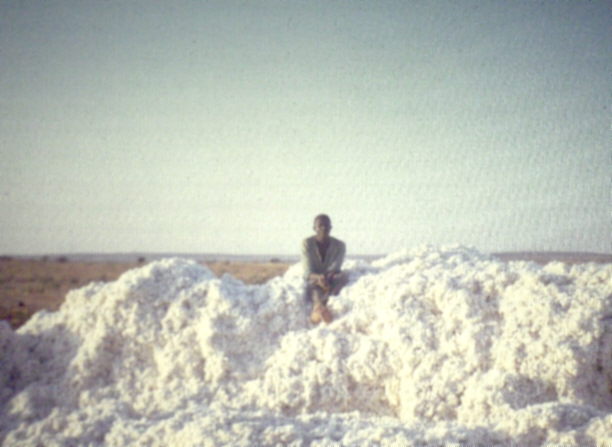
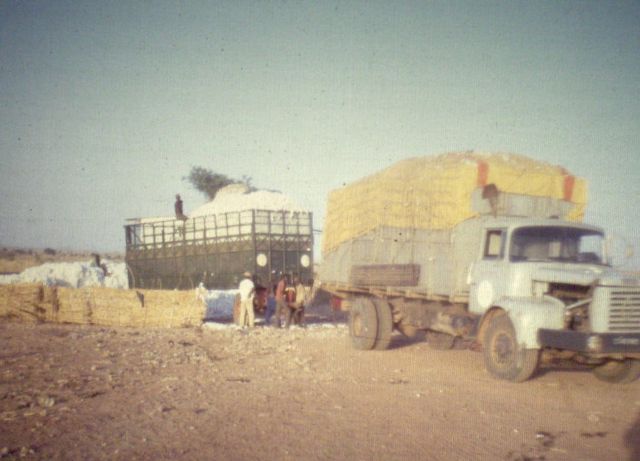
We saw cotton stored on the
ground in piles, carried in large bags on donkeys , and loaded on
trucks getting ready for shipment to market. |
 |
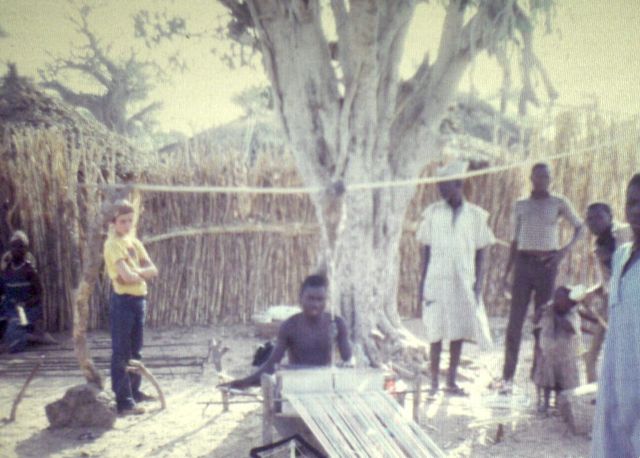
Here a young man was weaving cloth outside his house
next to the road |
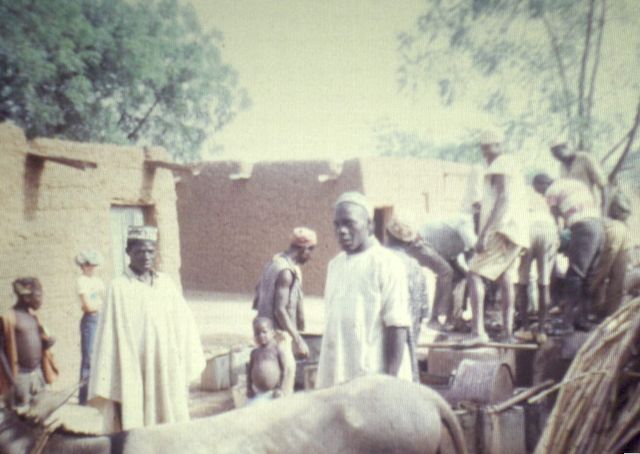
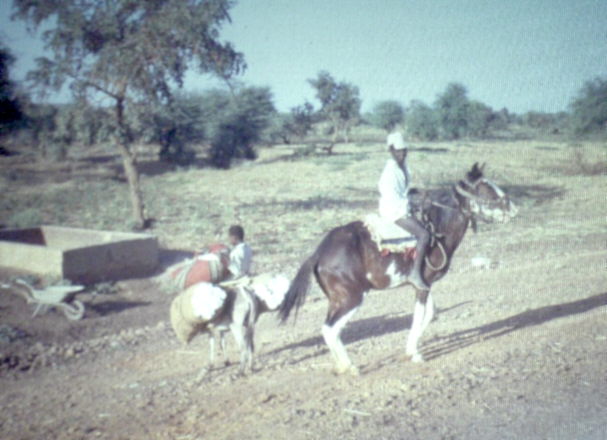
In Niger we saw water obtained from open wells with
ropes and pails. |
 |
When
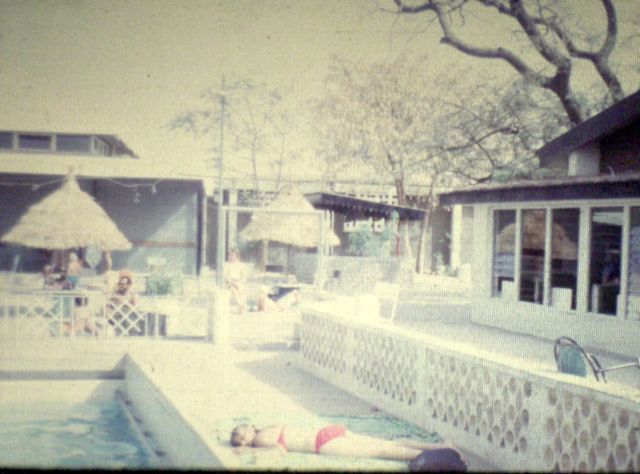
we reached Kano, Nigeria we found a camping spot adjacent to a racially integrated country club complete with a swimming pool.
As visitors entered the Kano Club they were confronted by a
bulletin board with a large notice that said: "Overlanders are
not allowed to jump into the swimming pool with their clothes on".
This club was like a heavenly retreat from the hot, dry, dusty
environment in the surrounding city of Kano, and especially after
the experience of crossing the 2000 miles of the Sahara Desert from
Algers, Algeria. When a person traveling from the Sahara first
saw the beautiful the swimming pool, it was a great invitation to
immediately jump into it to cool off.
There was a vacant, unkept piece of land near the Kano Club that
travelers who were traveling and camping through Africa were allowed
to set up camp. There were no sanitary facilities (only scrub bushes
to squat or stand behind) or water supplies
for those camped there. We were glad to have portable toilets, and a
water storage, treatment system in our tent camper. We stayed there for a week while we recovered
from almost complete exhaustion, and wrote a log of our experiences.
While in Europe we made our pilgrimage through the Netherlands where we could almost feel the spirit of
some of our ancestors. There we saw many of the customs practiced by our grandparents still being practiced
in Grand Rapids.
One of the reasons for our trip to Africa was to visit the ancestral homeland of our many friends
and neighbors. We saw many people and customs here that also resembled
many of those in Grand Rapids. |
 |
 |
|
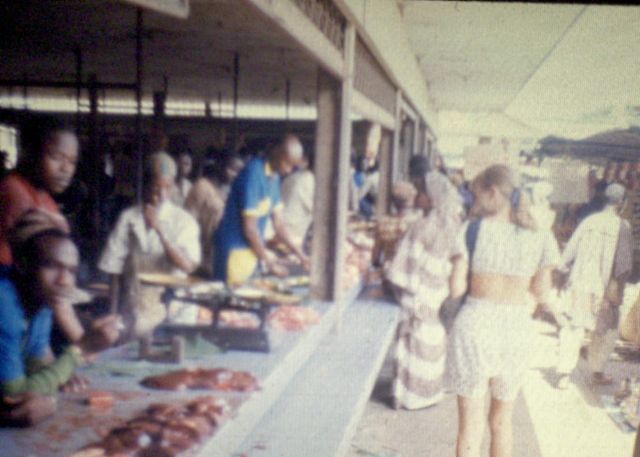
While in Kano we not only visited and enjoyed the Kano Club, we also
experienced similar conditions as most of the local population while
we camped on the vacant land near the club, preparing and eating
food that we purchased in the local open market. We camped in
Kano for two weeks trying to regain our energy after our difficult
desert crossing. |
|
 |
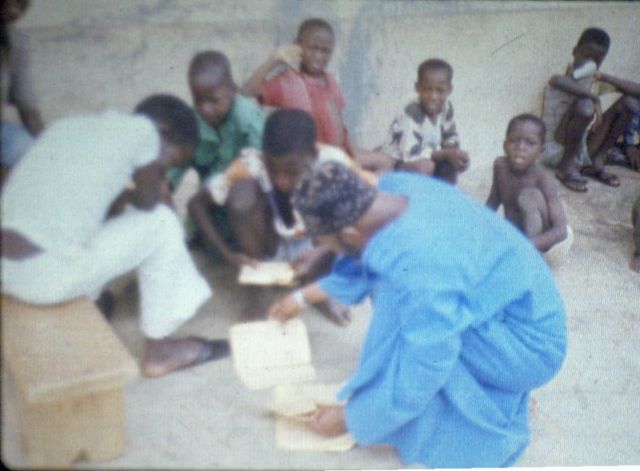 |
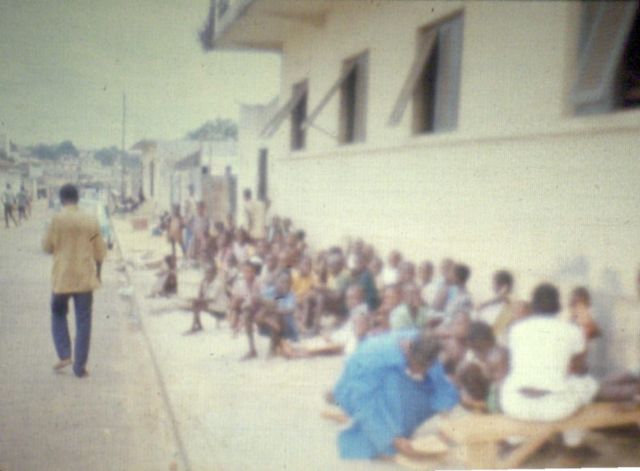
While in Kano we
visited much of the city and saw children being taught on the
sidewalk outside the school building to get away from the heat.
We were especially impressed by the discipline of the children and
the lack of educational materials used by both the teacher and
students.
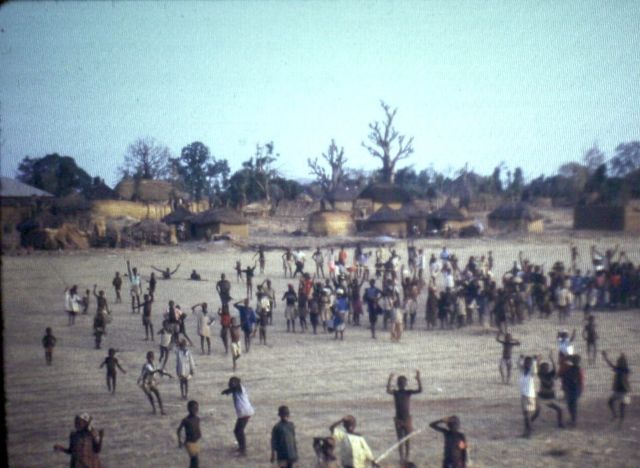
In the
photo below, the school children were having a Track & Field
competition before we stopped near them on the road to take a photo.
Before we prepared to photograph them, all the children and their
teachers were in the typical organized formations to do track and
field events. When they saw us stopped nearby, we became the
event to watch and all their careful organization came apart. I'm sure
the teachers didn't appreciate our presence, but the kids did.
After we took this photo we went down the street a few yards and got
permission to set up our camper and began to prepare supper and
repair some things that needed attention. Although we were
away from the school athletic field, The kids didn't let us get away
from their attention. Many of the kids followed us to where we
had set up our equipment and surrounded us to see what we were
doing. Since we had experience with children with nothing to
do back home, we knew that we had to direct their attention unless
we wanted to have them cause some mischief or stir up unwanted,
unhelpful excitement. Therefore, we
asked them if they ever sang any songs in school. When they
proudly told us that they did, we invited them to sing for us. They
then sang several songs like they were on a stage in front of their
parents. It was such a joy to see and hear these young
children sing. However, the children were so congregated around our
camping site that adults, in the background who were curious, couldn't see what we were
doing and finally drove the kids away with switches after a while, so that
their view of this unusual foreign camping event was not obstructed by the children. |
|
 |
|
When entering the
continent of Africa from Morocco and Algeria through the Sarah
Desert and into the area inhabited by people of dark skin,
we were impressed with the personal cleanliness of the people.
Even though the country is dusty and most of the homes are made of dried mud and other material that is difficult to clean
and easily makes people dirty, the people emerge spotlessly clean, many women,
men and children are dressed in pure white dresses and brilliant colors. The U.S. manufacturers of detergents would do well to film these people as testimonials to the effectiveness of laundry detergents in an unfavorable environment.
Even living in an American tent camper, we had great difficulty
getting and keeping clean and presentable. |
|
 |
 |
|
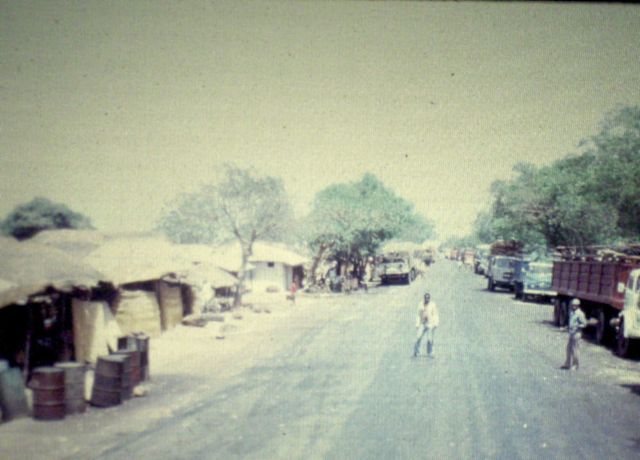
Nigeria, West Africa, like the US, is
supplied with food and other supplies by truck over many roads.
Many
trucks stop for fuel out of 50 gallon metal drums. The drivers
find parts and get repairs from many one person repair shops in
small villages. We saw drivers sleeping under their trucks and
eating meals near their vehicles. Many trucks were being
repaired on the pavement at the edge of the roads, and several
trucks had their drivers waiting for repair parts to be delivered
from cities far from there. |
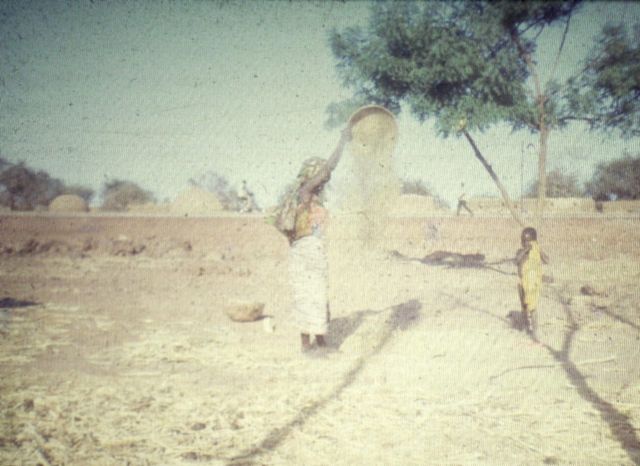
Even though people
could purchase bread and most processed food in a market of small
shops, there were many people who processed their own food after
growing it in their own garden or purchasing the raw food and
processing it themselves to save money. Notice the
lady sifting grain above, like in the Bible. In the
background, not very visible in this photo, are telephone/electric
power poles and a paved road. |
|
In the South of Nigeria the country
gets much greener and agriculturally, and materially more
productive. That allows more wealth that is expressed
in more substantial material wealth urban neighborhoods in Lagos. |
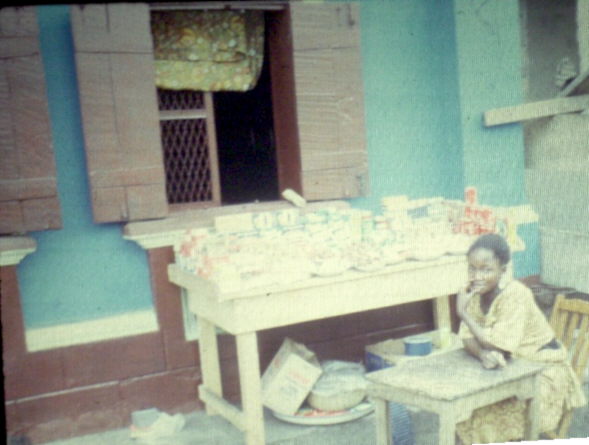
Although there are modern grocery
stores and large open markets, there were many independent merchants
setting up shop outside their homes
along the busy streets of Lagos. |
 |
 |
|
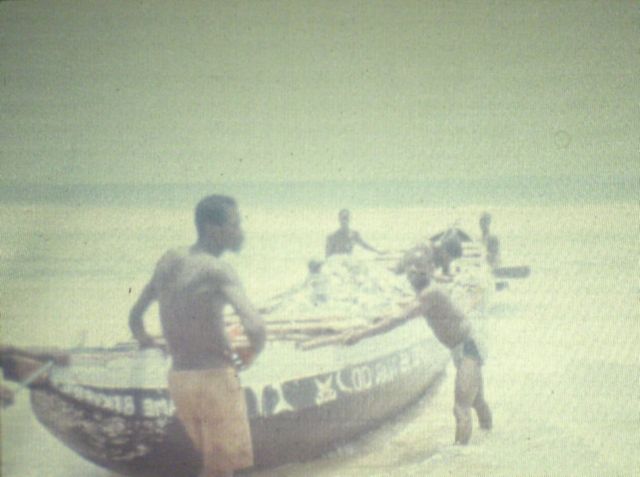
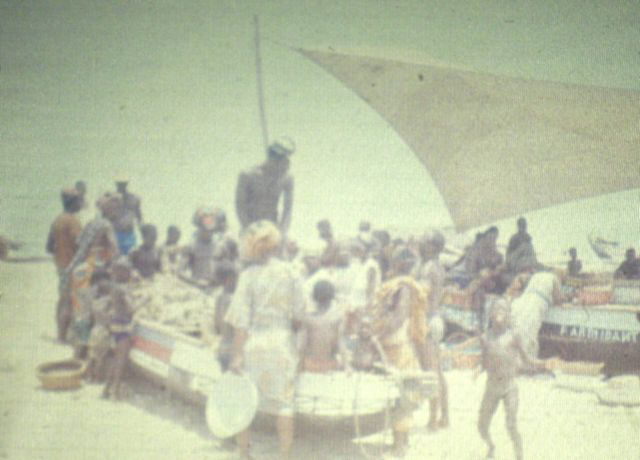
Outside Lagos Nigeria there is the popular Victoria Beach where
people camping through West Africa and fisher people from Ghana who
set up a temporary small village/encampment. We camped along
side the fisher families there for two weeks while we applied for
visas to Ghana, Dahomey, Togo, Ivory Coats and Liberia. While
our
family camped among the Ghanaian families of the fishermen, we swam
in the ocean for two weeks. |
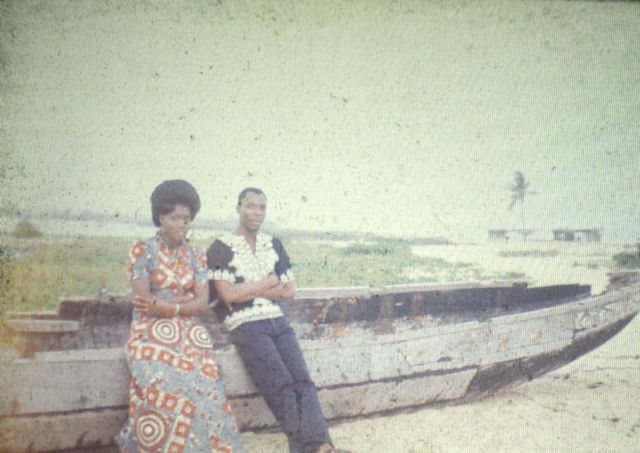
Many people from Lagos came
to Victoria Beach during the evening to enjoy the cool breeze and
the beautiful romantic scenery |
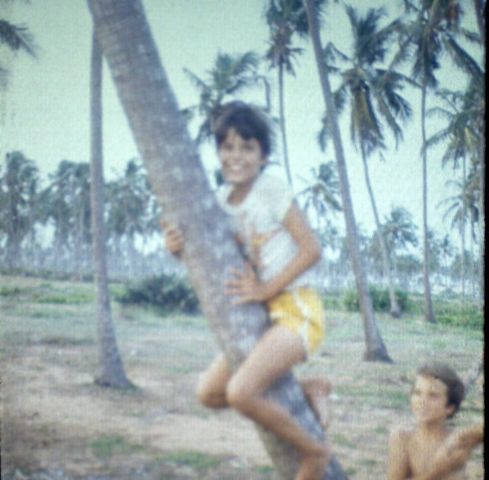
While
camping on the African the coast our sons enjoyed copying what they
saw
some local adults do to get fresh coconuts. |
|
After we
obtained the visas necessary for out continued travel, we headed
West along the African Coast. |
 |
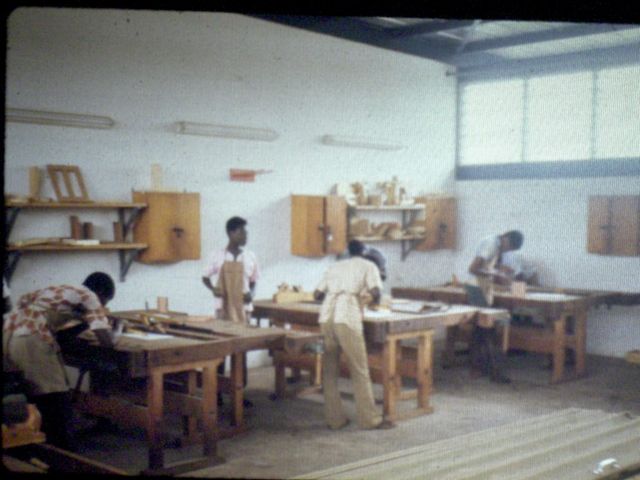 |
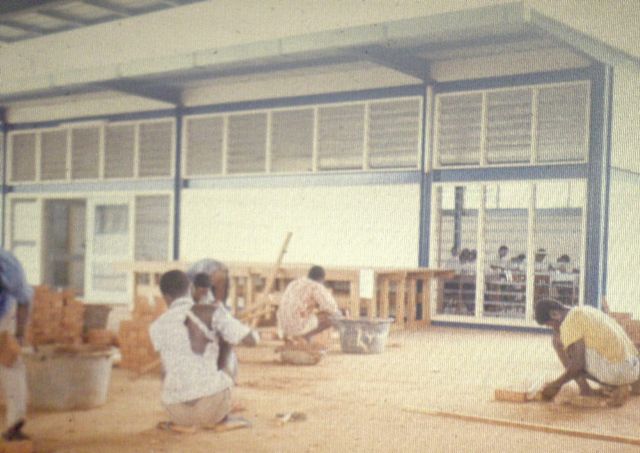
| We
camped in the parking lot outside the Y.M.C.A. in Accra, Ghana where
there was a trade school teaching construction skills. It was
at this location that we heard the male students gather each morning
and sing like a professional choir. It was at this location,
on a Palm Sunday morning, that we witnessed hundreds of
children and their church leaders march together carrying palm
branches down the street passing our camp site in the YMCA parking
lot singing Christian songs related to the Biblical story in
John 12: 12 - 19 |
 |
 |
| Abijan, Ivory
Coast is the most beautiful city that we have seen in both the
US, Europe, and Africa. The city has buildings that were
designed with a lot of imagination and with beautiful material.
The city is built along the ocean with modern highways and wonderful
trees and shrubs making a park-like appearance nearly everywhere.
A very unusual experience for us here in this tropical climate was
our visit to an ice skating pavilion with Japanese style landscaping.
From here we continued our travel West to Liberia. On our way
to Liberia, we traveled through cultivated the forests of rubber
trees managed by the Firestone Company. There were mile after
mile of carefully kept trees that were maintained by the Ivory Coast
families. These families lived in small village/encampments
that consisted of houses made of grass and mud. The people
were cooking over open fires and were carrying their water from some
distance away from their homes. It was sobering for us to see
the people who made it possible for us to drive by in a modern Jeep,
on Firestone tires living in such difficult primitive circumstances.
Today you could say that they are the world's 99%, and that we are
the 1%.
While driving in the Ivory Coast, we were stopped
by the police/army at a check point looking for untaxed material. It was
here that we met another family who were missionaries living and
ministering not far away from this check point. After visiting
with these Christian missionaries in the line of people backed up by the
police, we decided to
visit their place of ministry and discuss their wanting to buy
the tent camper that we were living in, that we would soon not need anymore.
When we got to their home we collapsed from fatigue! LaVerne
could hardly get out of bed once we stopped and didn't have to
travel. We were lovingly fed and cared for by this missionary
family until we were able to continue on to Liberia without our tent
trailer that we sold to this family. After we
returned to Grand Rapids, we continued to communicate with this
family and once they came to Grand Rapids and had a picnic with us.
Crossing the boarder into Liberia was a trying experience!
At the boarder the officials questioned why we didn't have the
trailer that was noted on some of our official papers. The
Ivory Coast boarder officials began to demand that we return 500
miles to Abijan, and get this one problem with our papers corrected.
We don't remember how we explained this situation we did point out
that all our papers were otherwise in order and LaVerne was very
weak and sick and needed to get some medical help. We spent a
lot of time at this small boarder in the forest that just had a
small pole across the road to hold us back. We could see
Liberia only a few feet away, and returning 500 miles was not what
we wanted to do with our family without our camping equipment that
we had just given to the missionaries. After several hours of
pleading our case the officials finally got tired of us, raised the
small wooden pole and let us cross into Liberia.
When
we finally crossed the boarder into Liberia we saw a national flag
that looked a lot like the US flag and found that their national
currency was the American Dollar, and the official language is
English. We expected to be in a country that would make us
comfortable with their culture. However as soon as we applied
for a visitors pass for our vehicle, we were asked for bribes and
found ourselves arguing for a receipt and finally accepting the
reality that to proceed, we would have to pay the official.
Because of the income and privilege gap between the Europeans and
local Liberian, Africans, we got that hostel look and body language
from the African Liberians like we got during the 1960s from many
African Americans who also were being discriminated against by
people who have our skin color.
After getting our official papers we then traveled to the
company town of Bong Mine, a
company town that has a lot of similarities to an American town with
all the extras of bowling, fast food restaurants, horse back riding,
and a golf course. To enter the town the traveler had to pass
a guarded gate like one at a large company in the United States.
The vehicle ahead of us was stopped and asked for identification.
As we approached the dark skinned, African guard, we expected to get
some type of hassle, but we were waved on. We thought that our
vehicle and pale skin must have been our pass into the company town.
The mining company has special housing units for
African workers built a lot like a one story motel that we were able to arrange to
live in during our week stay there, and eat in the company cafeteria. The great part of this
housing was that it had AIR CONDITIONING!
While at Bong Mine Town we were able to make arrangements to
sell out Jeep to a mining employee, and then take a taxi to Monrovia
, where we bought airline tickets that took us home to the US. |
| |
|
|